 ▾
▾Everything You Need to Know About TV Over the Internet
In recent years, broadcasting TV programs via the internet, known as IPTV (Internet Protocol Television), has significantly expanded. This broadcasting is primarily provided by telecommunications operators through their phone lines. What should you know before you start watching TV over the internet?
How does it work?
Connection is typically provided through high-speed internet connections or fiber optic connections. The undeniable advantages of IPTV include a wide range of TV programs and additional TV services, such as the electronic program guide EPG (Electronic Programming Guide), PPV (Pay Per View) paid program offerings, video on demand - VoD (Video on Demand), and other information services. The scope of these services always depends on the specific offerings of individual companies.
Where and how is IPTV available?
The availability of IPTV primarily depends on the availability of high-speed internet connections through which IPTV is transmitted. For instance, if you are interested in IPTV from a company that uses ADSL2+ for its transmission, then ADSL2+ must be available in your residential area. You can always check with the specific company offering IPTV about the availability of the technology. To watch IPTV, you will need a set-top box and, in the case of IPTV transmission via an ADSL connection, also an ADSL modem. Set-top boxes used for receiving IPTV are usually hybrid. This means that they also support terrestrial (DVB-T), satellite (DVB-S), and cable digital broadcasting (DVB-C).
What about simultaneous viewing and browsing?
You don't need to worry about any complications. Thanks to the separation of the bandwidth for phone calls and data transmission, along with setting priority for live TV broadcasting, you can simultaneously watch IPTV, make phone calls, download data, and surf the internet using a single fixed phone line or fiber connection.
Additional advantages of IPTV
- The watched program can be recorded for repeated viewing
- With the use of special equipment (e.g., DIGI2GO), you can pause, rewind, and watch the program from the desired spot at any time.
- One of the options to watch in real-time on TV or PC or another device is streaming through a classic media player. Players like VLC Player or BS Player, commonly used for watching movies from a disk, can also be used for watching TV.
- Another variant is streaming directly on the TV station's websites (Czech Television broadcasting also has this option).
Video servers instead of IPTV
Don't want to get IPTV and prefer individual programs? If you visit any of the TV station's video servers, you can easily watch programs online virtually anywhere and anytime (sometimes restricted abroad by broadcast license validity). To watch, simply select the desired program, click on play, and you can watch it directly from the provider's server. This seems to be an ideal solution for watching original shows, movies, and series from the TV station's production.
However, for real-time watching and streaming, expect that you will need a really high-quality, reliable, and fast connection for an uninterrupted experience. That way, you can choose high-definition quality, which will undoubtedly enhance the overall impression.
Phone instead of a card or key. What is NFC and how does it work?

Just hold your phone up to a terminal and within moments the payment is made. However, NFC technology is capable of much more. We will explain what NFC is and how it works, what actually happens during NFC mobile payments, what else you can use it for, and how secure it is. We will also show what NFC tags are and how they can simplify some daily tasks.
What would happen if the internet went down for a day?

What if there was a full-day internet outage? An immediate collapse of society wouldn't occur, but daily operations would quickly become complicated because today's world is more dependent on the internet than we often realize. Which services would stop functioning first, and what would happen with payments, transportation, or work?
WPA, WPA2, WPA3: Which Wi-Fi security should you use today?
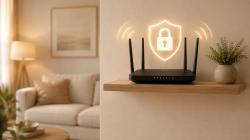
WPA, WPA2, WPA3, AES or TKIP? Wi-Fi security settings might initially seem unnecessarily complicated. However, when you understand what each abbreviation stands for, it becomes fairly simple. Therefore, we'll explain the differences between them and which is the best choice today. We'll also suggest what settings to choose if you have older devices at home that don't support the latest standard.
Is incognito mode really anonymous? Who still sees what you're doing

Do you think incognito mode hides you from everyone on the internet? In reality, it works a bit differently. We explain what it actually does, when it's sensible to use it, who can still see your activity, and whether history can be traced in incognito mode.
Why Does AI Hallucinate? A Peek Under the Hood of Language Models

AI can answer almost any question in just a few seconds. However, sometimes it confidently states information that is not true. Why does this happen and what are so-called AI hallucinations? In this article, we'll explain how large language models work, why they sometimes create false answers and how developers are gradually trying to mitigate this issue.
What is a CDN and why is internet content copied worldwide
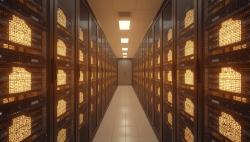
Behind every loaded video, photo, or webpage is a technology called CDN. It is used by streaming services, social networks, and regular websites, yet many people have never heard of it. In this article, we will explain what this abbreviation means, how it works, why internet content is stored in various locations around the world, and why today's internet can hardly do without it.